



 Menu
Menu Back
BackRetaining Walls
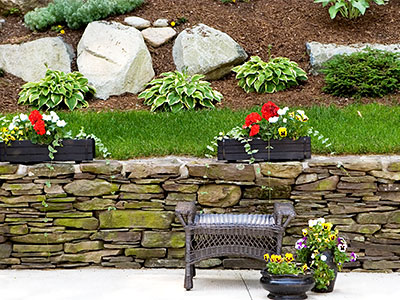
If your property has areas where soil is washing away after rainfall, slopes are becoming harder to maintain, or water is collecting and moving in uncontrolled ways, these are clear indicators that a retaining wall may be required. Likewise, if you're planning to build on a sloped section of land or need to create usable flat space, a properly designed wall system is often the only reliable solution. At Preferred Outdoor Designs, LLC, we approach retaining walls as structural systems built to manage land, control water movement, and stabilize your property long-term.
When a Retaining Wall Is Required
Retaining walls are typically installed in response to specific site conditions, not just preference. Understanding when they are needed is the first step in addressing property issues correctly.- Slope Instability and Elevation Changes: Properties with steep or uneven grading often experience soil movement over time. Without proper support, these slopes can shift, settle, or collapse, especially during heavy rain. Retaining walls hold soil in place and create defined grade transitions that prevent further movement.
- Soil Erosion and Washout: If you notice soil displacement, exposed roots, or sediment collecting at the base of a slope, erosion is already occurring. This is common in areas where water flows freely across the property without control. Retaining walls act as a barrier, stopping soil loss and protecting surrounding areas from continued degradation.
- Water Runoff and Drainage Pressure: Water is one of the biggest contributors to structural land issues. When runoff is not properly directed, it builds pressure behind slopes and along foundations. Retaining walls are often integrated with drainage strategies to relieve hydrostatic pressure and redirect water safely away from critical areas.
- Creating Usable Land: Sloped properties often include sections that cannot be used for patios, walkways, planting areas, or general access. Retaining walls allow these areas to be cut, leveled, and supported properly, transforming unusable space into stable, functional ground.
Retaining Wall Solutions Based on Site Conditions
Every retaining wall project is driven by the specific challenges present on the property. Rather than treating all walls the same, we focus on matching the solution to the condition.- Grade Retention and Structural Support: For properties with significant elevation changes, retaining walls are designed to hold back soil and create stable tiers. These systems are engineered based on slope height, soil type, and load requirements to ensure long-term performance.
- Erosion Control Along Property Edges: Where soil is actively washing out-such as along driveways, yard edges, or drainage paths-retaining walls provide containment. These installations prevent further soil loss while reinforcing vulnerable sections of the property.
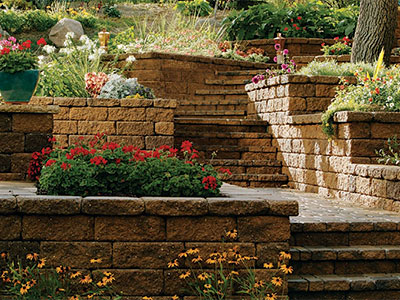
- Terracing for Multi-Level Stability: On steeper properties, a single wall is not always the best solution. Terraced retaining walls break a slope into multiple supported levels, reducing pressure on any one structure and improving overall stability.
- Drainage-Integrated Wall Systems: In many cases, retaining walls must work in conjunction with drainage improvements. Walls are designed to manage water flow behind and around the structure, reducing buildup and preventing failure caused by pressure over time.
Contractor-Level Site Evaluation and Planning
A retaining wall is only as effective as the planning behind it. Before any installation begins, a full evaluation of the property is necessary to determine the right approach.At Preferred Outdoor Designs, LLC, we assess:
- Existing grading and slope conditions
- Soil composition and stability
- Water flow patterns and runoff direction
- Load requirements based on height and surrounding structures
- Potential impact on nearby features such as driveways, foundations, or outdoor spaces
Built for Stability, Not Just Placement
Retaining wall construction involves more than stacking materials. It requires careful coordination between grading, base preparation, drainage integration, and structural reinforcement. These elements work together to ensure the wall performs under pressure and over time.Proper installation accounts for:
- Stable base preparation to support weight and prevent settling
- Controlled backfill to manage pressure behind the wall
- Drainage solutions to relieve water buildup
- Reinforcement methods when required for taller or load-bearing walls
A Complete Solution for Sloped and Problem Properties
Retaining walls are often part of a larger site solution that includes grading and drainage improvements. When these elements are addressed together, the result is a property that functions properly, manages water effectively, and maintains its structure over time.At Preferred Outdoor Designs, LLC, we handle retaining wall projects from initial evaluation through completion, ensuring that each wall is built with purpose and precision. Whether your property is dealing with active erosion, challenging slopes, or unusable land, we provide solutions designed to correct the issue at its source.
Start with the Right Approach
If your property shows signs of soil movement, water pressure, or unstable grading, a retaining wall may be necessary to protect and improve your land. Addressing these issues early prevents further damage and creates a safer, more usable environment.Contact Preferred Outdoor Designs, LLC today on 502-245-3997 or via our online form to discuss your property conditions and find out how a professionally planned retaining wall system can provide lasting stability and control.